.svg)

"AI lead follow-up" can mean quite a few things. Sometimes it's a chatbot that messages a new lead. Sometimes it's an AI-written email sequence. It can also mean automated calling or a system that sends a response as soon as someone fills out a form. All of those can be useful, but they solve a different problem from the one many sales teams actually have. The question isn't always how to contact leads faster. It's often which lead should be contacted first?
The form isn't where buying intent starts
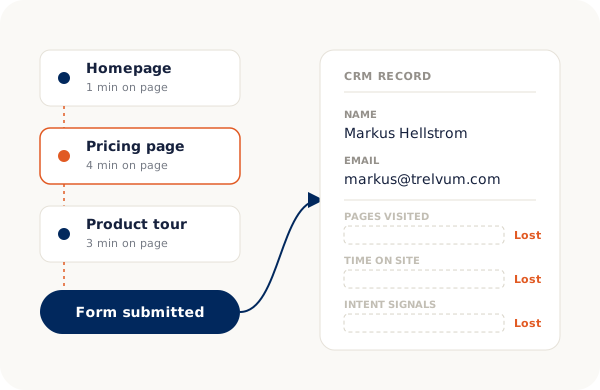
Someone filling out a form doesn't mean that's when they became interested. They may have been researching your company for days. They might have looked at pricing, read a case study, checked integrations, left, and returned later. By the time they give you their email address, there may already be a useful story in their behavior.
Subflare tracks that behavior before the form is submitted. It looks at things like the pages someone visited, how long they spent there and whether they came back.
That information becomes part of the lead's score when the lead enters the CRM. A rep can then see the difference between someone who has just discovered the company and someone who has been quietly researching it for two weeks.
That's useful context before the first call.
The real bottleneck isn't always speed
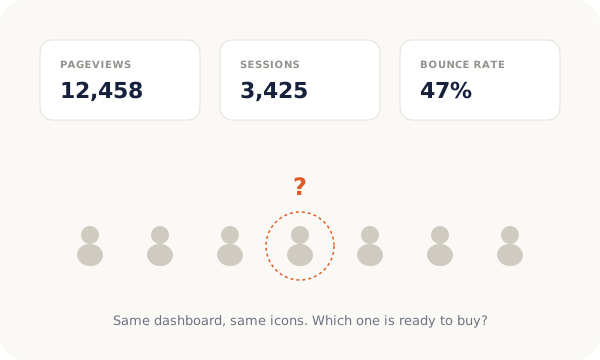
Sales reps already know they should respond quickly to a good lead. The difficult part is knowing which one is good.
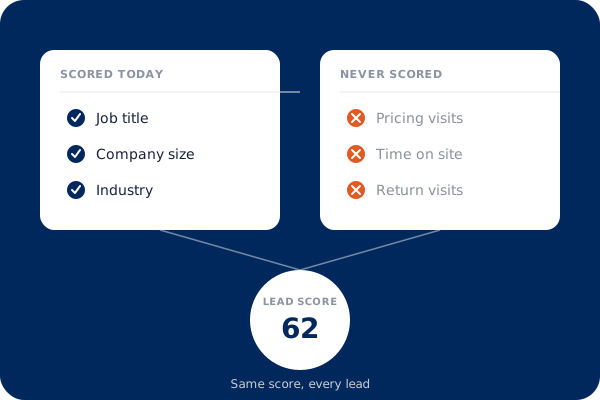
A lot of teams still prioritize inbound leads using whatever information is easiest to see: company size, job title, industry, or the order the leads arrived in. That works reasonably well if every lead is roughly equal, but they aren't.
A rep with fifteen new leads on a Monday morning isn't going to open every website session, look at every page visit, and reconstruct each person's research process. There simply isn't time.
So the leads get worked from the top down. That's where AI has a more interesting role than writing another email. It can help make the judgment about where the rep's time should go.
Where lead qualification fits
Traditional lead qualification often starts once the lead is already in the CRM. The rep checks the company, job title and other available information and decides whether the opportunity looks worth pursuing.
Behavior adds another piece to that decision. A lead who keeps returning to pricing and product pages is giving you different information from someone who downloaded one piece of content and disappeared.
Neither behavior guarantees that someone will buy. That's not the point. The point is that the rep has more information before deciding what to do with the lead.
"Neither behavior guarantees that someone will buy. That's not the point. The point is that the rep has more information before deciding what to do with the lead."
Where AI actually helps
The useful application of AI here is less about replacing the salesperson and more about helping them process information.
There can be dozens of signals around a lead. Humans can look at them, but they aren't going to do it consistently for every new form submission.
A system can. That can turn a messy list of new leads into something more useful:
• Call this person now.
• Give this one a normal follow-up.
• Let this one enter nurture.
The rep still decides what happens next, they just aren't starting from zero.
Follow up with the right lead first
Good follow-up isn't only about response time. It's also about knowing who deserves the response.
If your sales team is working inbound leads in the order they arrived, rather than based on the signals they're showing, there's probably an opportunity to improve the process.
You don't necessarily need more automation but rater better information about which leads are worth acting on first.
.svg)