.svg)
The problem is that most analytics tools only start paying attention after that moment.It’s like joining a conversation after the important part is already over.Traditional analytics platforms were built to measure outcomes — signups, purchases, completed forms. That made sense in a time when traffic volume and conversion counts were enough. But today, when buying decisions are slower, more researched, and more deliberate, this approach leaves teams guessing at the moment when clarity matters most.
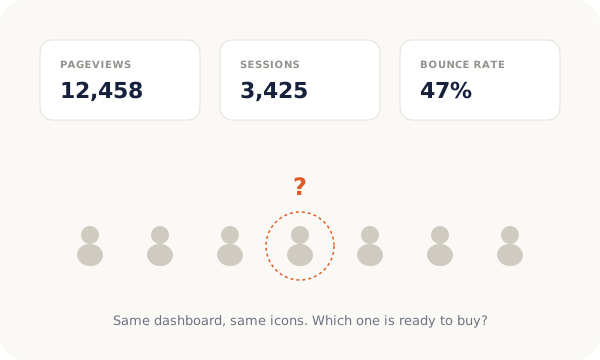
Which visitors are ready to buy right now?
The issue isn’t lack of data. It’s timing.
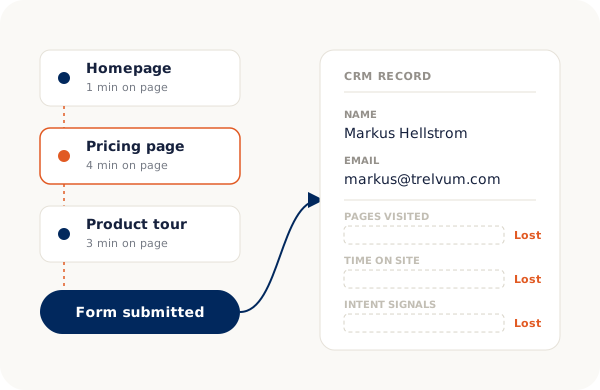
Traditional tools focus on what happens after conversion — once someone has already signed up, requested a demo, or purchased. By then, your ability to influence their decision is limited. The signals that actually predict conversion tend to appear much earlier, often before a visitor ever reaches a form.
The blind spot in post-conversion analytics
If you run a SaaS company, an ecommerce business, or any form-based funnel, this will sound familiar. Google Analytics can tell you how many people visited your pricing page. Heatmaps can show where users clicked. But neither answers the question teams actually care about:
Why clicks don’t equal intent
Page views and clicks are easy to measure, but they rarely tell the full story. One visitor might visit your pricing page five times and never convert. Another might glance at it once and submit a demo request the same day.
Without context, raw engagement data creates noise. You can see what happened, but not why it mattered or what to do next.
Segmentation becomes manual guesswork
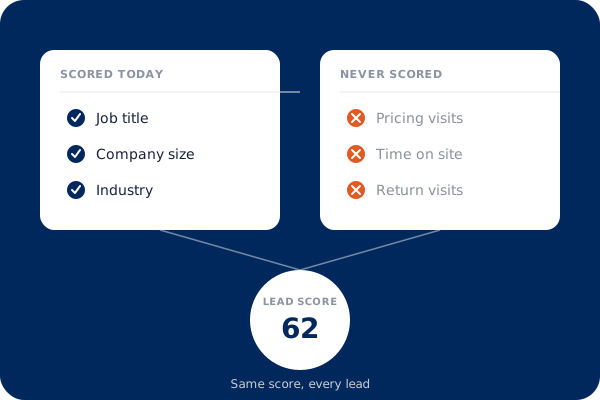
Identifying high-intent visitors with traditional analytics usually means building complex filters, defining assumptions, and hoping you’ve captured the right patterns. Teams manually stitch together page views, session counts, and events, trying to reverse-engineer intent from incomplete signals.
It’s time-consuming, technical, and often built on educated guesses rather than clear buying signals.
Even when useful patterns do emerge, they tend to live inside dashboards. Sales teams work elsewhere. Marketing works elsewhere. Insights rarely translate into action. By the time someone spots a trend, the opportunity has already passed — the visitor has moved on, converted, or disappeared entirely.
Add privacy requirements into the mix, and the problem compounds. More restrictions, less clarity, and more manual effort. The result is familiar: wasted outreach, low-quality leads, and conversion rates that plateau despite steady traffic.
The issue isn’t effort — it’s that most tools are looking in the wrong place.
.svg)