.svg)
The most common lead scoring mistakes B2B teams make
Beyond the pre-form data gap, there are a few patterns that consistently weaken lead scoring models in B2B.
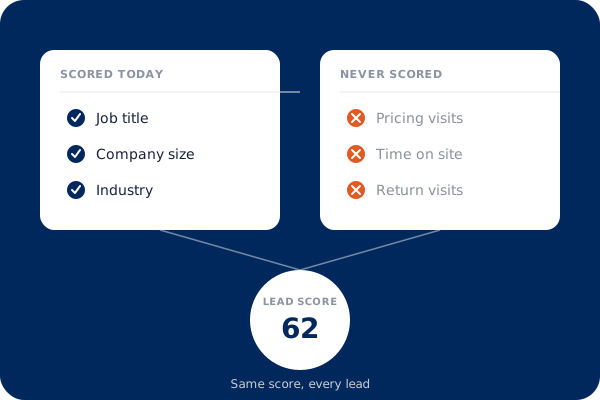
Over-relying on firmographics is the most common. Company size and industry tell you whether a prospect fits your ICP — they say nothing about whether that prospect is actively evaluating right now. A 500-person SaaS company in your target vertical scores well on firmographics whether they visited your site once six months ago or four times this week. The score looks the same. The reality is completely different.
Treating all page visits equally is another. Not every page on your website carries the same weight as a buying signal. Someone reading a blog post is browsing. Someone spending eight minutes on your pricing page is evaluating. A scoring model that counts both as a "website visit" is blurring a distinction that actually matters.
Ignoring recency is also a significant issue. A lead who engaged heavily three months ago and then went quiet is not the same as a lead who started engaging heavily this week. Scoring models that don't weight recency end up surfacing stale leads alongside genuinely active ones, which forces sales reps to do their own manual triage — exactly the problem scoring is supposed to solve.
The logic behind lead scoring is sound — the timing isn't
Most B2B lead scoring models are built around the same inputs: job title, company size, industry, email opens, content downloads. A prospect hits a certain threshold and gets flagged as sales-ready.
The problem isn't the model. It's when the model activates.
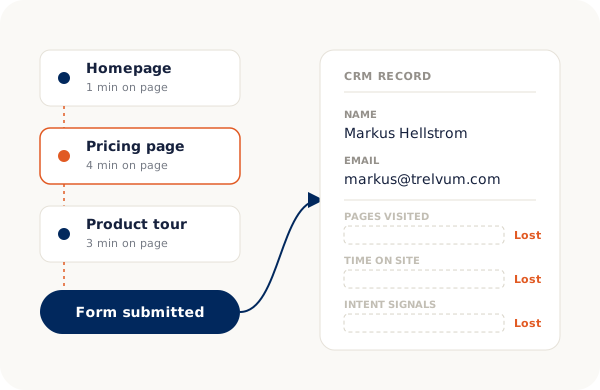
By the time a lead enters your scoring system, they've usually already done the hard work of evaluating you. They've read your pricing page, compared you to alternatives, maybe had an internal conversation about budget. The score you assign them reflects what they did inside your CRM — not what they did on your website before anyone knew they existed.
For a lot of B2B sales teams, that gap between actual buying behavior and scored behavior is where pipeline quietly disappears.
What lead scoring typically misses
First-party behavioral data — the stuff that happens on your website before a form is submitted — rarely feeds into traditional scoring models. And that's exactly where the most useful signals live.
A company that visits your pricing page four times in a week is telling you something. A prospect who reads your integration documentation twice in three days is imagining implementation. A company that visits, disappears for four days, then comes back — that gap usually means an internal conversation happened. These aren't weak signals. They're often stronger indicators of buying intent than a job title match or an email open.
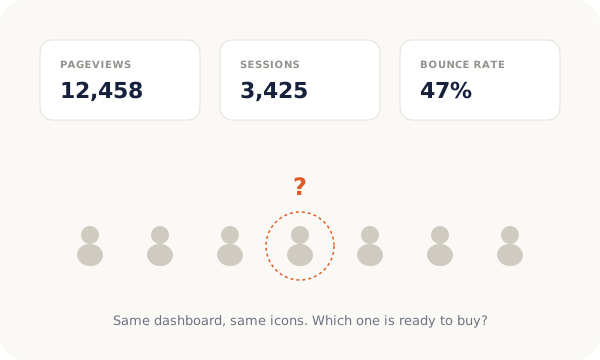
The issue is that most scoring systems were designed around data that's easy to capture — firmographics, CRM activity, marketing engagement. Pre-form website behavior is harder to capture, so it gets left out. The score ends up reflecting a partial picture of a prospect who may have already made most of their decision.
If you want to understand why this gap exists at the analytics level, our post onwhy traditional analytics miss buyer intent covers exactly that.
What good scoring data actually looks like
The signals that most reliably indicate serious buying intent in B2B aren't complicated. They're specific and observable.
Pricing page visits, particularly repeat visits within a short window, are consistently one of the strongest indicators. A prospect who visits pricing once is curious. A prospect who visits three times in five days is working through a budget conversation internally.
When a prospect is reading about how your tool connects with their existing stack, they're past the awareness stage. They're assessing implementation — a late-stage evaluation behavior. Subflare captures that signal and routes it directly into your CRM or existing workflow, so your sales team sees it without having to check another dashboard.
Multiple visitors from the same company arriving within the same week is another strong signal. It suggests the evaluation has moved beyond one person's curiosity into a broader internal discussion. A buying committee is forming.
Return visits after a gap of a few days often indicate that something happened internally between the two visits — a meeting, a budget conversation, a comparison with a competitor. The return visit frequently carries more intent than the original one.
When these signals are combined and scored together, they paint a picture of where a prospect is in their buying journey that firmographics and CRM activity simply can't replicate. This is exactly what Subflare's segmentation is built around — grouping visitors by behavioral intent rather than demographics, so your team knows not just who visited, but how serious they were.
Firmographics tell you who someone is. They don't tell you what they're about to do.
How to close the gap without rebuilding everything
The fix isn't scrapping your existing scoring model. It's adding a layer of pre-form intent data that captures what's happening on your website before any form is submitted.
Subflare identifies company-level website visitors and tracks behavioral signals — pricing visits, return visits, documentation engagement — feeding that data directly into your existing sales workflow. The model stays the same. The inputs get significantly better.
The result is a prioritized list that reflects where prospects actually are in their buying journey, not just where your CRM thinks they are. For sales teams dealing with high volumes of inbound traffic, that distinction is the difference between working a list and working the right list.
Ready to see what your website is telling you before the form arrives? See Subflare's founding customer plans →
.svg)