.svg)

If you need more prospects
Tools such as Apollo, ZoomInfo and Cognism are primarily built around finding contacts and building prospect lists. They're useful when outbound is an important part of your pipeline and your sales team needs more people to reach. This is the classic use case for B2B lead generation software.
But a prospecting database doesn't solve a different problem: working out which of the inbound leads you already have are most likely to buy. If your website is already generating plenty of leads, adding more contacts to the top of the funnel may not be what you need.
Finding contacts, qualifying leads or converting them? These are different problems.
If you don't have enough people to contact, you need a prospecting or data platform. Iyou're already getting inbound leads but don't know which ones deserve sales attention, you have a lead qualification problem. If qualified leads are going cold because nobody follows up properly, the problem is further down the funnel.
This matters because lead generation software isn't one category in practice. Different tools solve different jobs.
If you need better lead qualification
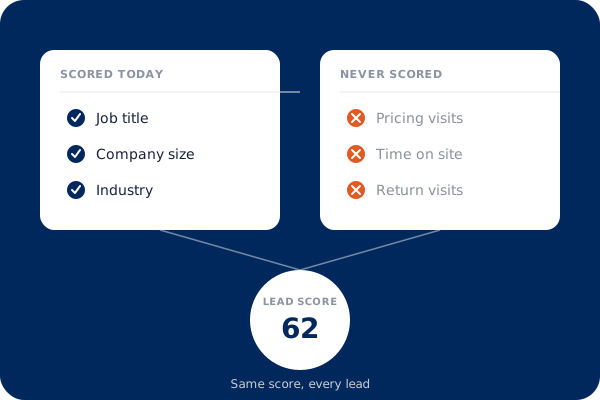
This is where things get less straightforward. You can have plenty of form submissions and still have a sales team that doesn't know where to start. A CRM might tell you that a lead works at a 500-person SaaS company and has a VP title. This is all useful information, but it doesn't tell you whether they're actually interested in buying. This distinction matters more than you think.
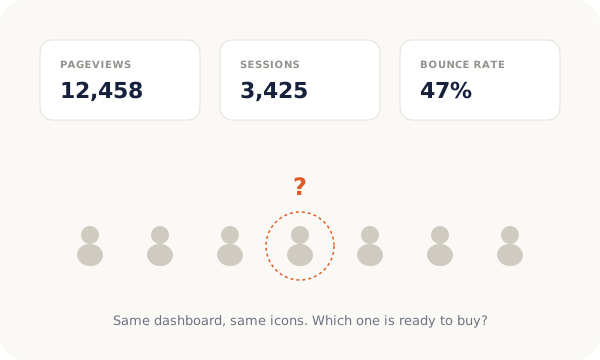
One person might download an ebook and never return. Another might spend two weeks researching your product, visit pricing several times, read a case study and then request a demo.On paper, both could look like excellent leads. Their behavior says otherwise.
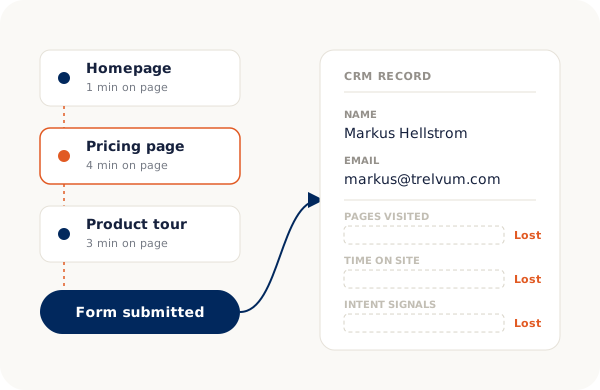
Subflare focuses on that part of the funnel. It tracks what visitors do before they submit a form, including the pages they visit and whether they return, and uses those signals to score the lead once they're identified. The result is less guesswork for sales.
Instead of simply seeing that a new lead has arrived, a rep gets some context about what that person was doing before they filled out the form.
The best B2B lead generation tool depends on where that gap is. More leads won't fix a qualification problem. More automation won't necessarily fix a prioritization problem.
So which tool should you choose?
Start with the problem, not the tool.
If you don't have enough prospects, look at prospecting platforms and contact databases. If you have plenty of inbound leads but sales doesn't know which ones are worth pursuing, look at lead qualification and behavioral scoring. If qualified opportunities are sitting untouched, look at follow-up and sales engagement tools. And if your team already has a CRM but still works every inbound lead in the order it arrived, there may be a gap between having the leads and knowing what to do with them.
The best B2B lead generation tool depends on where that gap is. More leads won't fix a qualification problem. More automation won't necessarily fix a prioritization problem.
The useful tool is the one that addresses the part of the funnel your team is actually struggling with.
.svg)