.svg)
Search "best b2b lead generation tools" and you'll get the same list everywhere. Fifteen tools, one paragraph each, no real distinction between them. That's not very useful if you're actually trying to fix a specific problem, because "lead generation" covers a lot of different jobs, and most teams don't need all of them at once. Before picking a tool, it helps to be honest about which part of the funnel is actually broken.
What behavioral data tells you
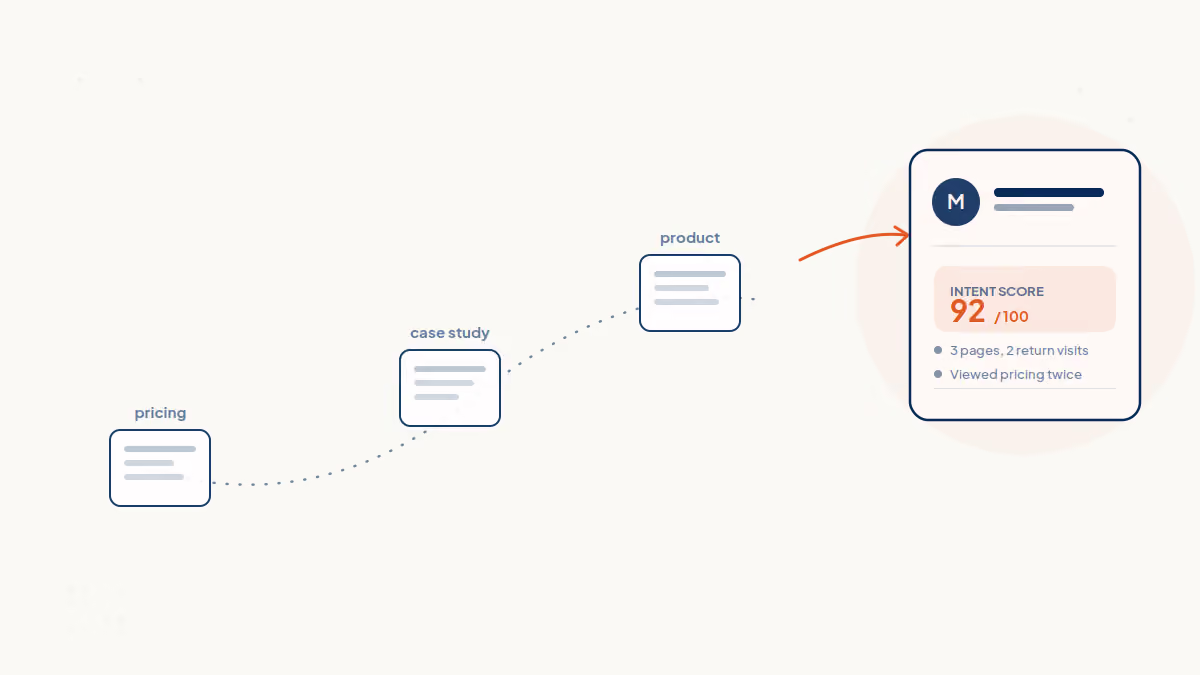
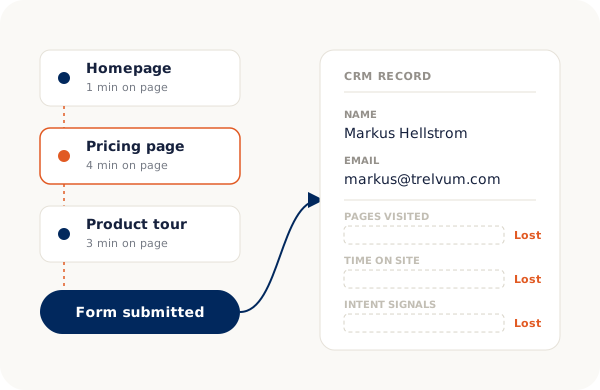
The useful information is often in what happened before the form. Which pages did someone visit? Did they come back? Did they spend time looking at pricing or implementation? Did they read a customer story and then return to the product page?
A standard CRM record doesn't usually give a rep much of that context, and this is where lead scoring can help.
Subflare tracks behavior before the form is submitted and uses it to score the lead when they enter the CRM. A rep can see that someone has been researching the product for a while instead of treating the form submission as the first thing that ever happened.
That changes how the lead gets handled. Someone who has visited pricing three times doesn't need the same opening conversation as someone who downloaded a general guide and hasn't returned.
The lead you get isn't the lead you think you got
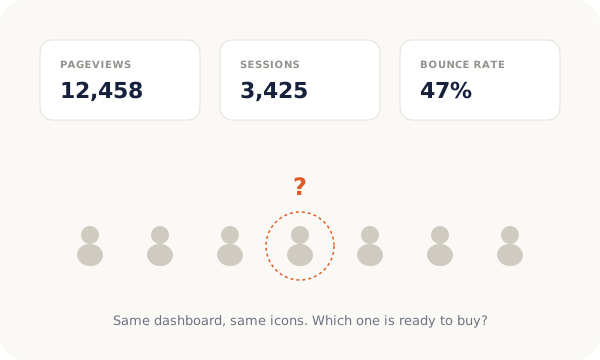
A form tells you a name, an email address, possibly a job title and company size if you are lucky. It doesn't tell you whether that person has been researching your product for two weeks or just found you through Google five minutes ago.
Those two people can submit the same form, but they probably shouldn't get the same follow-up. This is why speed to lead matters, but isn't the whole story. Getting back to a low-intent lead within two minutes doesn't make that person more interested. It just means you found out they weren't interested faster.
The opposite can be expensive too. If someone has been reading your pricing and product pages all week and your team doesn't respond until the next day, they may already be talking to someone else.
The question isn't just how quickly sales responds, but rather who gets the fastest response.
Why traditional lead scoring misses part of the picture
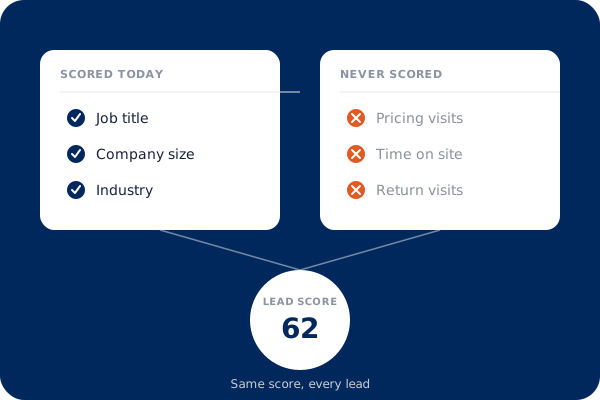
A lot of lead scoring is based on firmographic information: company size, industry, job title and similar fields. That's useful. You need to know whether a lead fits your ideal customer profile. But fit and intent aren't the same thing.
Two people can have almost identical profiles and be at completely different points in the buying process. One might be researching a project for next year. The other might be trying to solve the problem this week. Firmographic scoring doesn't tell you much about that difference, but behavior can.
The two work better together. Fit tells you whether someone looks like the right customer and their behavior gives you some indication of how actively they're considering a solution.
Most teams have plenty of information about the first part.
"That's not about ignoring the first lead. It's about using the information you already have to decide where a rep's limited time is most valuable."
Where to start
If you're getting inbound leads but not converting enough of them, look at what happens between the form submission and the sales conversation.
Then look one step earlier. What did those people do before they became leads?
Your website is already producing signals about interest. If your sales team isn't using those signals, they're making prioritization decisions with only part of the information available. Better inbound conversion doesn't always start with generating more leads.
Sometimes it starts with knowing which ones to call first.
.svg)