.svg)

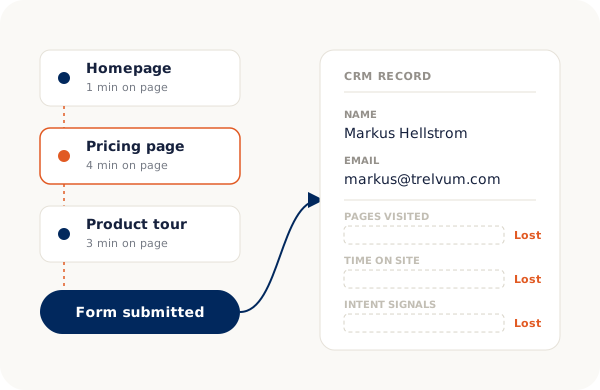
This is the anonymous traffic problem, and for B2B sales teams it matters more than it might seem. Unlike B2C, where any individual visitor might convert on a whim, B2B buyers go through long evaluation cycles. The same company might visit your site four or five times over two weeks before anyone fills in a form. During that entire period, your sales team has no idea they exist.
Most of your traffic is invisible
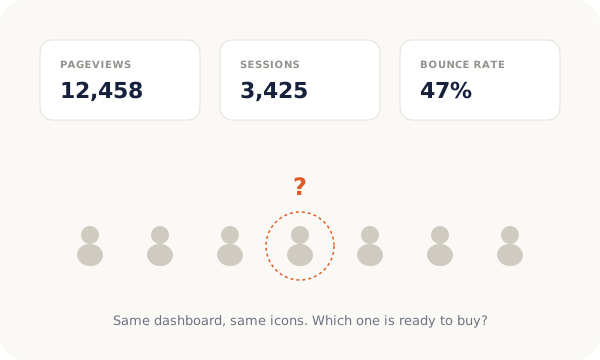
When a company lands on your website, your analytics platform records a session. What it almost never records is who that company is, what they were actually looking at, or whether they came back the next day. The visit is logged. The company behind it disappears into aggregate numbers.
How visitor identification actually works
Company-level website visitor identification works by matching the IP address behind an incoming session to a business database. Most companies have IP ranges registered to their organization, which means a visit from their office network or corporate VPN can be traced back to the company. The session gets connected to a real organization rather than sitting in your analytics as an anonymous user.
It is worth being upfront about the limits. This approach works reliably for companies visiting from office networks. Remote workers on residential connections are harder to identify. And it identifies organizations, not individual people — you see that a company visited, not which specific person was browsing. For GDPR purposes, company-level IP identification is generally treated as business data rather than personal data, but the specifics depend on how each tool is implemented. Subflare runs on EU infrastructure specifically to support compliant deployments for European teams.
"Knowing a company visited your site is useful. Knowing they visited your pricing page three times this week is something you can act on."
How sales teams use it in practice
The most practical application is straightforward. Your sales team gets a daily view of companies showing meaningful engagement on your site, ordered by signal strength. Instead of starting the day with a cold list, they have a prioritized view of companies that are actively looking at you right now.
The conversation that follows is different too. When a rep reaches out to a company that has visited pricing twice and spent time in the documentation, they are not making a cold call. They are reaching out during an active evaluation window, with context about what the company has been looking at. That is a different starting point.
Subflare surfaces this data and routes it directly into your CRM via integrations, so the team sees it where they already work. The leads were always there. The identification just was not. See how it works at subflare.ai/integrations.
.svg)